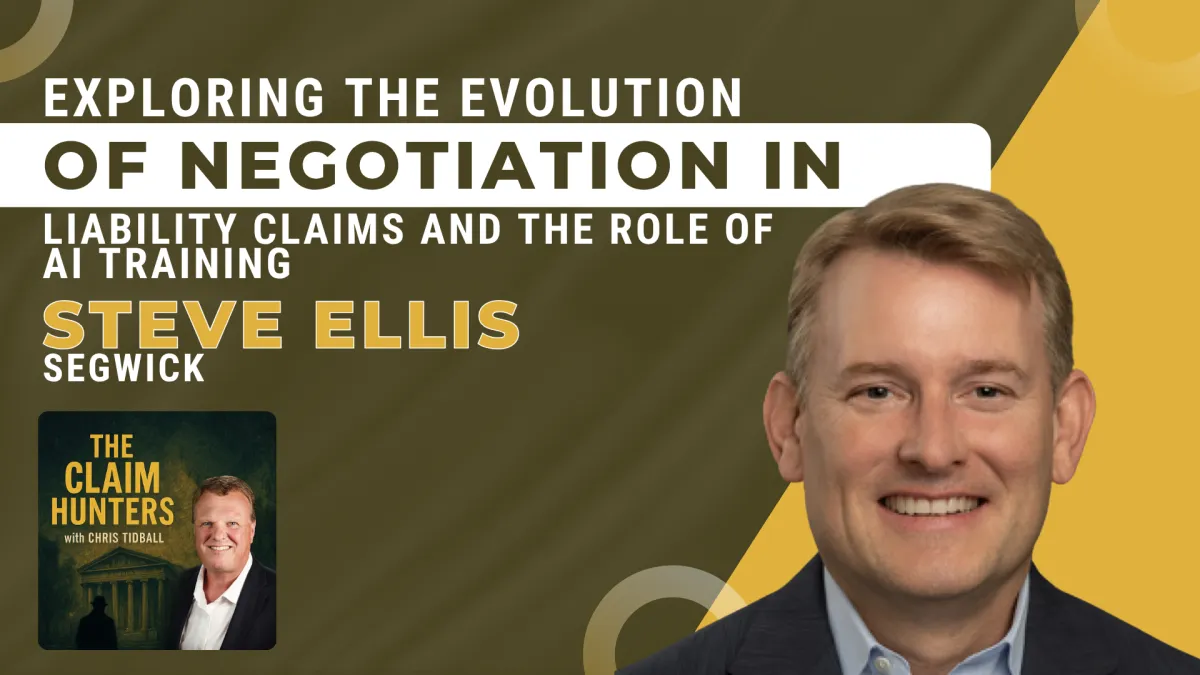
55 - Exploring the Evolution of Negotiation in Liability Claims and the Role of AI Training
Mastering the Art of Negotiation: Strategies for High-Stakes Claims
In this episode of The Claim Hunters Podcast, host Chris Tidball sits down with Steve Ellis, Vice President of Liability Practices at Sedgwick, to discuss the revitalization of negotiation skills within the insurance industry. As claims become increasingly complex and "nuclear" verdicts rise, Steve shares his expertise on why traditional negotiation fundamentals must be merged with modern psychological frameworks and technology. This conversation offers deep value for claims professionals looking to move beyond "splitting the difference" and toward defensible, data-driven settlements that protect the bottom line.
Psychological Leverage and the Framework of Modern Settlements
Negotiation in the claims space has evolved from a simple exchange of numbers into a sophisticated psychological exercise that requires a deep understanding of leverage and alternatives. Steve Ellis emphasizes the importance of the BATNA (Best Alternative to a Negotiated Agreement) framework, which serves as the ultimate benchmark for any adjuster. By identifying and strengthening alternatives—such as gathering more robust evidence or preparing expert testimony—before entering the room, a negotiator gains the confidence to walk away from a bad deal. This shift from a reactive stance to a proactive strategy ensures that settlements are based on the actual merits of the case rather than the pressure to close a file quickly.
The rise of remote work has created a significant gap in experiential learning, making it harder for junior adjusters to shadow veteran negotiators and pick up the nuanced "soft skills" required for success. To counter this, organizations must be intentional about fostering mentorship and utilizing virtual simulations to provide the feedback loops that used to happen naturally in an office environment. Steve suggests that the industry must move beyond one-time training sessions and toward a culture of continuous peer review and simulation. This approach not only builds technical proficiency but also helps adjusters recognize and adapt to the diverse negotiation styles they encounter when dealing with opposing counsel or claimants.
Mediation and specialized negotiation teams are also reshaping how high-value liability claims are resolved. While mediation offers a structured environment for creative problem-solving and reduced litigation costs, its success hinges on thorough preparation and the ability to articulate interests rather than just positions. Some organizations are now deploying specialized negotiation units for complex cases to ensure consistency and expertise. However, a hybrid model is often most effective, as it allows specialists to handle the heaviest lifting while still empowering the broader claims staff to master the fundamentals of comparative negligence and shared fault scenarios.
About Steve Ellis
Steve Ellis is the Vice President of Liability Practices at Sedgwick and a distinguished MBA negotiation instructor. With decades of experience in claims management and strategy, he is a leading voice on the intersection of academic negotiation theory and real-world insurance application.
About Sedgwick
Sedgwick is a leading global provider of technology-enabled risk, research, and integrated business solutions. The company provides a broad range of resources tailored to the needs of the insurance industry, specializing in claims administration, liability practices, and productivity management.
Links mentioned in this episode
Guest Company: Sedgwick
Guest LinkedIn: Steve Ellis
Key Episode Highlights
The BATNA Framework: Why knowing your "Best Alternative to a Negotiated Agreement" is the most powerful tool for maintaining leverage in insurance disputes.
Experiential Learning in a Remote World: Practical strategies for mentoring junior adjusters and simulating negotiation scenarios outside of a traditional office.
The Psychology of Leverage: How to identify and strengthen your position through better evidence and preparation before the first offer is made.
Mediation Best Practices: Moving from "positional bargaining" to interest-based negotiation to find creative, cost-effective settlements.
Comparative Negligence: The critical importance of training staff to recognize and negotiate shared fault to reach more equitable outcomes.
Conclusion
This conversation highlights that negotiation is not just a soft skill, but a cornerstone of technical claims excellence that requires constant refinement. By blending classic negotiation theory with modern technology and a commitment to mentorship, claims professionals can achieve more predictable and defensible outcomes in an increasingly volatile legal landscape.
Ready to step up your claims strategy? Visit ChrisTidball.com for resources that will sharpen your edge and help you lead in today’s fast-changing insurance landscape. And if you’ve got insights or experience to share with the industry, apply here to be featured on The Claim Hunter podcast.


