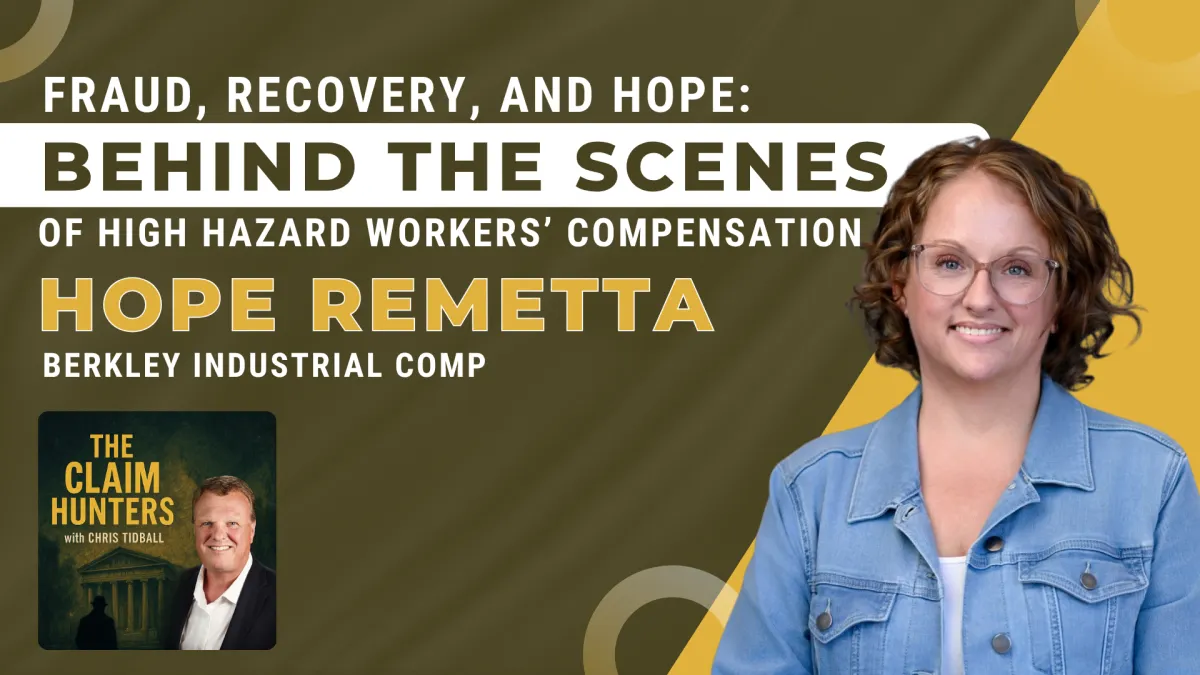
59 - Fraud, Recovery, and Hope: Behind the Scenes of High Hazard Workers’ Compensation
Navigating Catastrophic Workers’ Compensation Claims: Expert Insights from Berkley Industrial Comp
In a specialized industry where injuries are rare but life-altering, the stakes for claims management could not be higher. In the latest episode of The Claim Hunters Podcast, host Chris Tidball sits down with Hope Remetta, Director of Claims at Berkley Industrial Comp, to explore the intricate world of catastrophic workers’ compensation. Managing cases that often exceed $250,000 in incurred costs—ranging from traumatic brain injuries to complex legacy claims like the Federal Black Lung program—requires a blend of clinical precision and creative problem-solving. This conversation provides a masterclass for insurance professionals on how to balance high-dollar exposure with the human element of vocational rehabilitation and long-term care.
The Berkley Approach: Precision and Creativity in High-Hazard Claims
Managing catastrophic claims in high-hazard industries requires a departure from the "assembly line" processing found in high-frequency, low-severity environments. Hope Remetta explains that Berkley Industrial Comp focuses on a highly skilled workforce, including chemical experts and tower directors, where injuries are often complex and span multiple jurisdictions. To address this, the organization prioritizes adjuster autonomy, encouraging claims professionals to think outside the box rather than sticking to rigid protocols. This flexibility is critical when coordinating care across state lines, as each jurisdiction presents a unique regulatory environment that can significantly impact the trajectory of a claim and the eventual recovery of the injured worker.
One of the most powerful strategies discussed is the willingness to invest heavily in specialized care early in the life of a claim to secure better long-term outcomes. For example, providing top-tier, out-of-state prosthetic centers and specialized retraining for an amputee can be the difference between permanent disability and a successful return to work. By addressing the psychological barriers and physical limitations of a catastrophic injury through holistic case management, an insurer can restore a worker’s sense of purpose while simultaneously reducing long-term financial exposure. This proactive investment demonstrates that quality of life and cost containment are not mutually exclusive, but rather deeply interconnected goals in high-hazard workers' comp.
While the primary focus remains on recovery, maintaining vigilance against malingering and fact manipulation is a necessary component of catastrophic claims management. Hope Remetta notes that while outright fraud is rare in these high-severity cases, inconsistencies in stories regarding safety equipment or secondary employment must be addressed through routine surveillance and social media checks. Furthermore, identifying third-party liability—such as equipment manufacturer defects—early in the process allows for maximum subrogation recovery. By integrating a dedicated recovery team into the claims workflow and leveraging investigative findings, organizations can ensure that the ultimate financial responsibility rests with the correct party, protecting the integrity of the insurance fund.
About Hope Remetta
Hope Remetta is the Director of Claims at Berkley Industrial Comp. With a career defined by managing high-stakes litigation and catastrophic injuries, she oversees a specialized team that handles some of the most complex workers' compensation cases in the industry. Her approach combines deep regulatory knowledge with a commitment to empowering adjusters to find innovative solutions for injured workers.
About Berkley Industrial Comp
Berkley Industrial Comp provides specialized workers' compensation insurance solutions for high-hazard industries. The company is known for its "RAMP" (Recognize, Assess, Manage, Prevent) philosophy and its expert claims handling, which focuses on severe injuries in niche markets such as mining, explosives, and heavy manufacturing.
Links Mentioned in This Episode
Guest Company: Berkley Industrial Comp
Guest LinkedIn: Hope Remetta
Key Episode Highlights
The Power of Autonomy: Why empowering claims adjusters to make creative, independent decisions leads to better outcomes in catastrophic cases.
Investing in Quality: How utilizing premier, out-of-state medical facilities can actually lower the total incurred cost of an amputation or TBI claim.
Legacy Claim Management: Navigating the unique regulatory hurdles and "long-tail" nature of the Federal Black Lung program.
Psychological Vocational Rehabilitation: Addressing the mental hurdles that prevent high-skilled workers from returning to their original roles after a life-altering injury.
Strategic Subrogation: The importance of identifying third-party liability early to maximize recovery in high-hazard environments.
Conclusion
Catastrophic claims management is as much an art as it is a science, requiring a specialized focus on the most severe injuries. As this conversation illustrates, the keys to success involve a blend of compassionate care, heavy upfront investment in medical excellence, and a persistent eye toward subrogation and fraud detection to protect the bottom line.
Ready to step up your claims strategy? Visit ChrisTidball.com for resources that will sharpen your edge and help you lead in today’s fast-changing insurance landscape. And if you’ve got insights or experience to share with the industry, apply here to be featured on The Claim Hunter podcast.


